

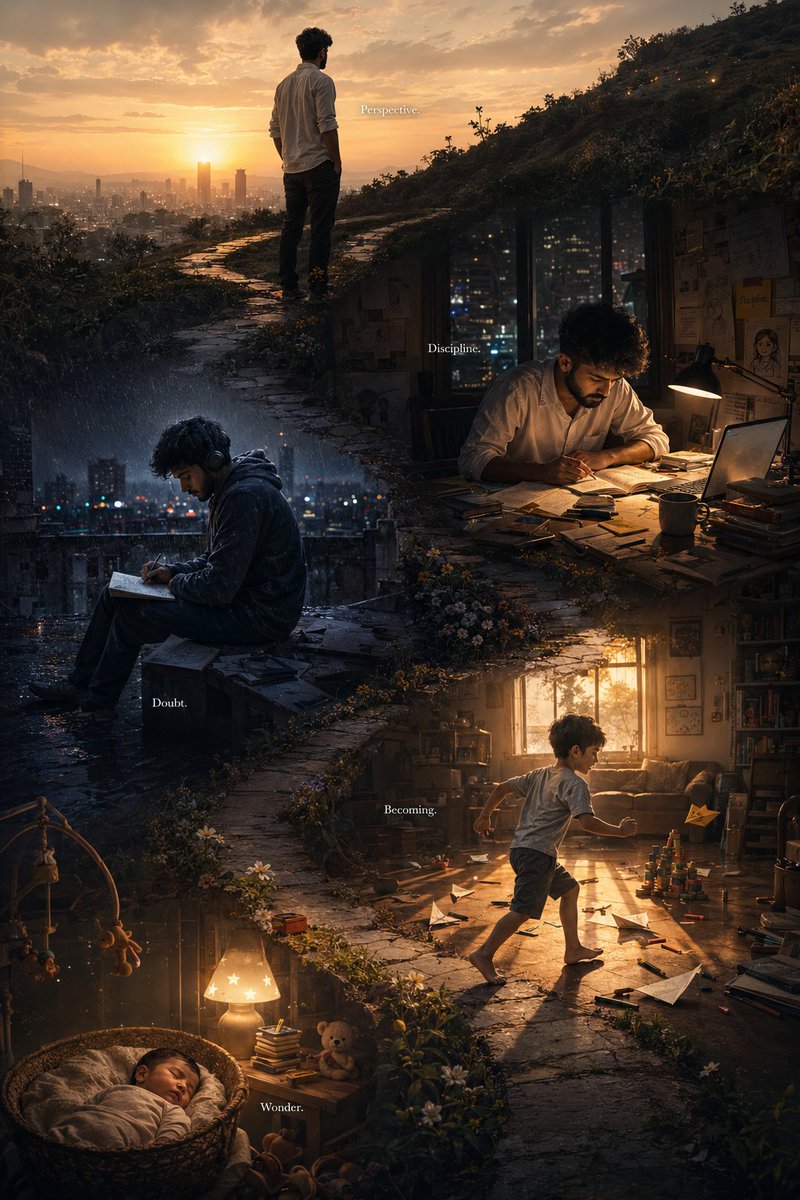
Create a cinematic visual titled: “THE PEOPLE WE BECOME.” The image should depict multiple stages of one human life existing simultaneously inside a single interconnected environment shaped by memory, growth and emotional transition. Avoid the feeling of: - a motivational poster, - a staircase timeline, - or separate portraits pasted together. Instead, the world itself should evolve naturally between life phases as if memories are physically blending into one another. The composition follows a winding stone pathway moving through different emotional spaces connected seamlessly across the image. At the bottom of the frame: A newborn sleeps inside a softly lit woven cradle near a dim bedside lamp. The atmosphere feels warm, silent and untouched. Nearby: - folded baby blankets, - soft shadows, - wooden toys, - faint moonlight through curtains, - dust particles drifting in warm air. The pathway slowly transitions into early childhood. A young child runs barefoot through a living room filled with scattered crayons, comic books, paper airplanes and half-built toy structures. Late-afternoon sunlight pours through large windows and reflects softly across wooden floors. The environment gradually changes again without hard separation. The next version appears around age 13: sitting alone on a rooftop during light rainfall wearing headphones and holding a notebook. Distant city lights blur softly behind him while unfinished sketches scatter beside him. The atmosphere becomes quieter and emotionally uncertain. Further along the path: A university-age version studies late at night at a cluttered desk illuminated only by a warm desk lamp and laptop screen. Around him: - highlighted textbooks, - coffee cups, - handwritten notes, - exhaustion, - ambition, - and isolation. Rain reflects softly across the apartment window behind him. At the highest point of the composition: An older version stands quietly overlooking a sunrise city skyline from a hillside path above the city. He looks calm rather than triumphant. His clothing is simple and grounded: rolled sleeves, slightly tired posture, hands in pockets, wind moving softly through his shirt. He should visibly feel like the same person shaped by every previous version. The transitions between life stages should contain subtle symbolic continuity: - flowers growing through cracks in concrete, - notebook pages blending into city architecture, - rainwater reflections becoming skyline lights, - old drawings faintly appearing on apartment walls, - childhood objects partially hidden inside later environments. Typography should remain minimal and restrained. Small serif text placed naturally near each stage: “Wonder.” “Becoming.” “Doubt.” “Discipline.” “Perspective.” No motivational quotes. No oversized typography. Lighting should evolve emotionally throughout the image: - warm soft childhood tones, - cooler rainy teenage atmosphere, - isolated tungsten lighting during study years, - balanced sunrise light in adulthood. The realism should feel grounded: - believable facial continuity across ages, - natural environmental texture, - subtle lens softness, - realistic lighting behavior, - physically believable spaces, - quiet cinematic atmosphere. The image should feel intimate and reflective rather than grand or overly dramatic. Mood: memory, identity, growth, loneliness, ambition, emotional evolution and the quiet passage of time.



0 Comments
👥 Co-learning Circle 0
Observe other members' variables & configurations, and click "Study & Retry" to instantly import settings and practice!